
Something in your home is making you feel unsettled and it has nothing to do with how hard you're trying.
You’ve tried to be more motivated. You've tried the routines. The planners. The positive thinking.
And yet there's still this low-level restlessness you can't quite shift - a tension when you walk through your front door, rooms that feel heavy for no obvious reason, tiredness that doesn't make sense given how much sleep you're getting.
Most people assume that means something is wrong with them.
But here's what almost no one considers: your nervous system is responding to your home every single minute of the day, and if your environment is sending the wrong signals, no amount of effort or discipline will fully compensate for it.

The ways your home drains you are subtle enough that most people never notice them.
A front door that sticks or opens onto a wall. A bed that has its back to the door. Pathways that are slightly cluttered in a way you've learned to step around. A room that you find yourself avoiding without being able to explain why.
None of these things register consciously. But your nervous system picks up every single one of them, and over time that constant low-level scanning starts to feel like low motivation, mental fog, an inability to switch off, or a general sense that life is harder than it should be.
You think it's your mindset. You think you just need to try harder. But what if it's your layout?
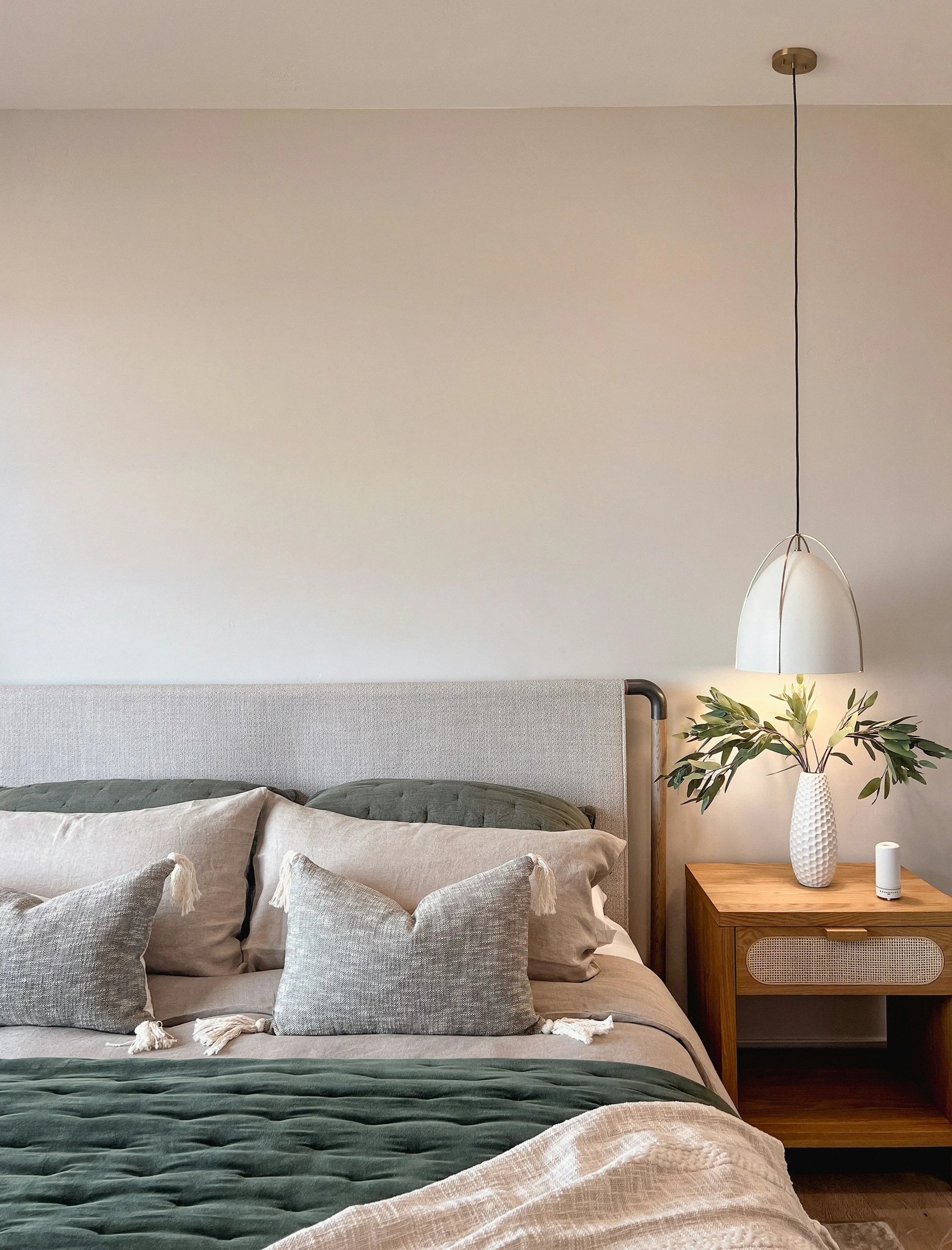
The Feng Shui home energy checklist
This is a free, grounded, practical tool for starting to understand what your home has been doing to you. It's not overwhelming - it's a clear, room-by-room walkthrough of the things that most commonly affect how your nervous system feels at home, so you can finally see what's been there all along.
You'll walk through your entryway, your living room, your bedroom, and general home maintenance, answering simple, specific questions - things like whether you can see the door from your main seat, whether anything is stored under your bed, whether your front door opens smoothly.
Small details that turn out to have a bigger impact than most people expect.
Why any of this actually matters
Your body is constantly scanning for safety. That's not a metaphor - it's how your nervous system is designed to work. When your home subtly signals tension, blockage, or imbalance, you stay in a low-grade stress response without realising it. You keep trying to fix your habits, your productivity, your confidence, your mood.
But the environment that's shaping all of those things stays the same. The checklist helps you see what's actually been going on - not to judge yourself or create a new list of things to fix, but because awareness is genuinely the first shift.
You can't change what you haven't seen yet.
This is for you if...
You feel unsettled in your own space and can't put your finger on why. You rearrange things regularly but can never quite land on something that feels right. You crave calm at home but it always seems slightly out of reach. You've wondered whether your home could feel better but don't know where to start and you want a genuine starting point, not an overwhelming list of things to change.
What you'll find out.
Once you've worked through the checklist, you'll have a clear picture of whether your home is actively supporting you, partially supporting you, or quietly working against you and which specific areas to pay attention to first.
If you've been feeling like you're pushing against something you can't see, this is often the moment it starts to make sense. Because it was never about effort. It was about environment.
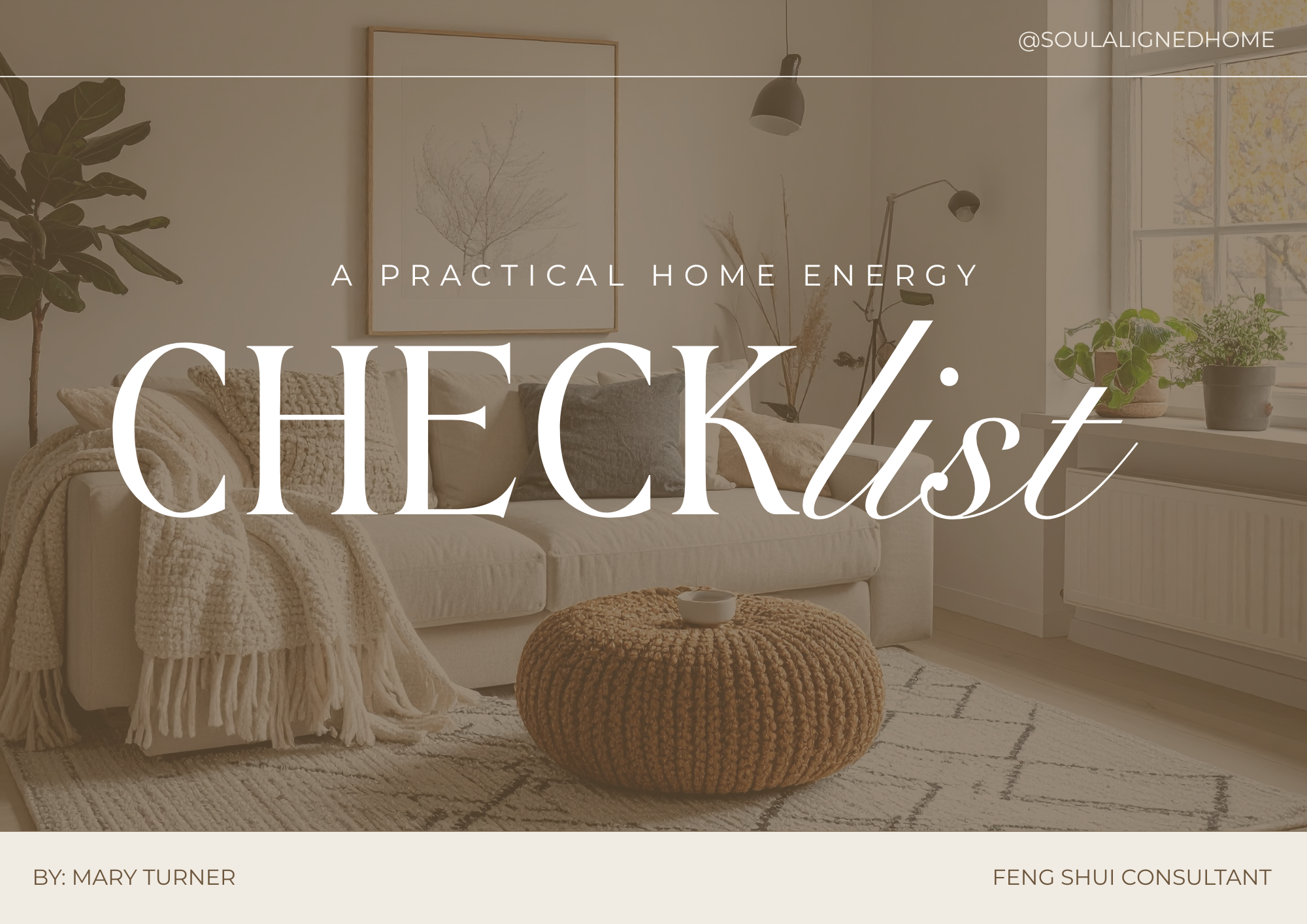
Your home has been communicating with you for a long time. This is how you start listening.
Download the Feng Shui home energy checklist and see what your space has been saying all along.
By downloading this guide, you will be joining the Soul Aligned Home email community

I'm Mary | Feng Shui consultant and nervous system-aware home expert.
I help women understand how their home has been quietly shaping how they feel and what to actually do about it. Feng Shui isn't about grand overhauls or perfect spaces. It's about understanding the relationship between your environment and your nervous system, and making small, intentional changes that let your body finally exhale.
If the checklist resonates with you, you're in exactly the right place.